
Dam Inspection Planning for Safer Property Decisions
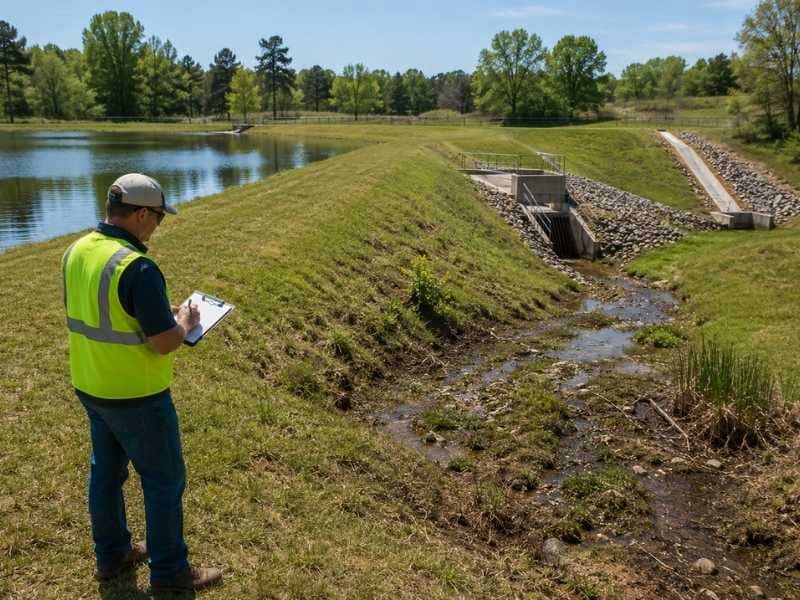
Owning a pond feels peaceful until someone brings up the word liability. A dam inspection trades that worry for facts. It tells an owner what the structure is really doing, not just what it looks like from the far bank. Small earthen dams fail slowly and quietly. By the time a problem is easy to see from the driveway, the fix has already grown costly. Regular inspection is how owners stay ahead of trouble instead of chasing it.
Understanding the Purpose of a Dam Inspection
An inspection puts trained eyes on a structure that gets ignored most of the year. The inspector walks the crest, both slopes, the toe, and the ground downstream. They look for signs that water is finding a path it should not take. Owners rarely spot these signs. They build up over years, and grass hides almost everything.
The goal is early detection, not alarm. A soft spot at the toe or a small dip in the crest means something to a trained eye. Catching either one early keeps the repair simple and cheap. Waiting turns the same finding into a real project, with a contractor, a permit, and a much bigger bill.
Reviewing Water Control Structures and Drainage Features
The dam holds the water back, but the structures around it decide whether the dam survives a big storm. A spillway that cannot handle a large inflow sends water over the top of the embankment. Water flowing over an earthen dam can cut through it in hours.
Inspectors look closely at the parts that move water safely past the dam:
- the primary spillway and its outlet pipe, checking for cracks, rust, split joints, or blockage
- the emergency spillway, checking whether it stays clear and holds its shape
- the outlet gate or valve, checking whether it still opens
- drainage features at the toe, checking whether they run clean or cloudy
- the downstream channel, checking for erosion or debris that backs water up
A clogged pipe seems like a small problem. During a storm, it becomes the reason the water has nowhere to go.
Identifying Early Warning Signs of Dam Deterioration
Seepage draws the most attention, and it should. Water passing through an embankment can carry soil with it. Soil moving out of a dam creates a void that grows every time it rains. Clear seepage deserves watching. Cloudy seepage deserves an engineer.
Other signs point to slower trouble. Cracks along the crest. A slumped spot on the downstream face. Animal burrows tunneled straight through the fill. Brush and trees whose roots open channels through the packed soil. Wet ground at the toe that never dries counts too. None of these means the dam will fail. But each one turns routine upkeep into something worth watching closely.
Using Inspection Findings to Guide Maintenance Planning
Findings only help when they turn into a plan. A good report sorts what it finds by urgency. That lets an owner tell the item that needs attention this season from the item that can wait two years.
That sorting makes budgeting real. Clearing brush, fixing a rodent burrow, and growing back grass cost very little. They also prevent a surprising share of serious problems. Replacing a failed outlet pipe or rebuilding a scoured spillway costs a lot. So owners gain by knowing that expense is coming, rather than facing it during a flood. Comparing this year’s report to last year’s also shows whether a crack is growing or holding steady. That is often the most useful thing in the file.
Supporting Property Decisions With Professional Inspection Records
A documented inspection history changes how a property sells. Buyers ask hard questions about ponds and dams. Lenders ask harder ones. An owner with a clean file answers both without slowing the deal down. An owner with no records invites a discount instead.
The records matter for liability too. A dam sits upstream of someone, and that fact rarely goes away. Showing that a structure was inspected on a set schedule, and that findings were handled, proves reasonable care. That matters if the question ever reaches an insurer or a court. Beyond that, the file keeps the knowledge in one place. The next owner or manager inherits a history instead of a mystery.
Frequently Asked Questions
How often should a private dam inspection be performed?
Once a year works well for most small structures, with an extra look after any unusually heavy storm. Storms are when hidden weak spots show up, since a high pool tests the spillway and the embankment at the same time. Dams with known issues, or dams sitting above homes and roads, deserve a shorter interval.
What problems can a dam inspection identify?
Seepage carrying soil, cracking, settling of the crest, slope movement, erosion, burrowing animals, woody growth on the embankment, and damaged or blocked outlet works. Inspectors also flag conditions downstream that could back water up against the structure. Each finding says something about how the dam will act the next time the pool rises.
Who should perform a professional dam inspection?
Someone trained in dam safety, usually an engineer with experience in embankments and hydraulics. Familiarity matters more than a title, because reading seepage or judging a spillway’s capacity takes practice. Owners can and should walk their own dam between formal inspections. But a trained review is what turns observations into decisions.