
Site Design Choices Influence Approval Timelines
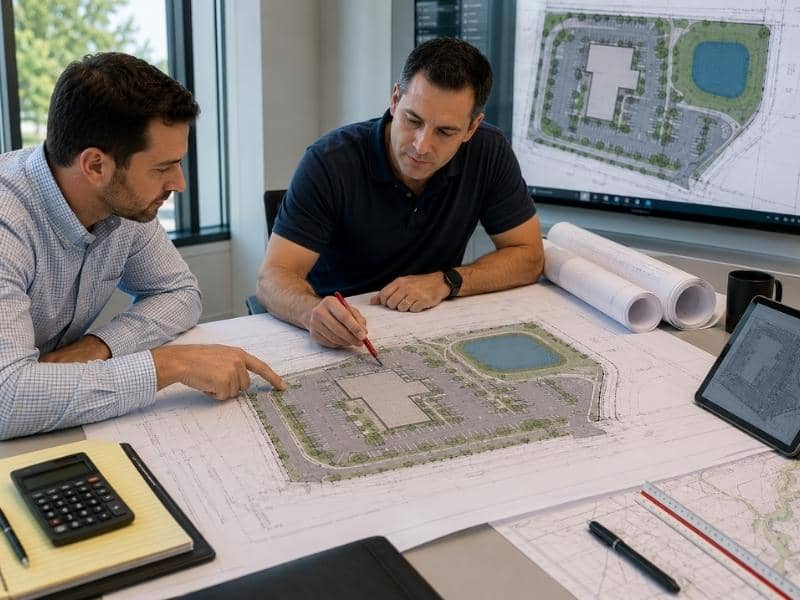
Site design decisions made early in a project can speed up approvals or slow them down. A well-prepared site design gives reviewers what they need. A poorly organized one creates questions, triggers revisions and adds weeks to the timeline.
Why Good Site Design Matters
A good site design gives a project a clear foundation before permits are requested. It shows reviewers how the site will function, how it connects to roads and utilities and how it handles water runoff. When those answers are clear, reviewers move quickly.
Projects that skip careful planning often pay for it later. A design that misses drainage requirements may pass one review and get flagged in another, sending plans back and delaying the whole project.
What Is Included in a Site Design
Site design covers more than where a building sits. Each part affects how the project functions and how reviewers evaluate it.
- Buildings and setbacks: placement must meet zoning rules for minimum distances from property lines, roads and neighboring structures.
- Parking and circulation: the layout must show enough spaces, proper dimensions, accessible stalls and clear paths for vehicles and pedestrians.
- Roads and access points: entry and exit locations need to align with traffic standards and any requirements from transportation agencies.
- Sidewalks and pedestrian paths: these must connect key areas of the site and meet accessibility requirements.
- Drainage and grading: the plan must show how water moves across the site and where it goes after leaving the property.
Missing information in any of these areas is one of the most common reasons plans get sent back.
Small Site Design Mistakes Can Cause Delays
Most approval delays don’t come from major errors. They come from small oversights that reviewers catch and flag for correction. A common example is missing dimensions. A parking layout without stall widths forces the reviewer to ask for more information before confirming it meets code. That one gap can add a week or more.
Outdated base maps cause similar problems. If the survey doesn’t reflect current site conditions, the plan may show structures or grades that no longer exist. Reviewers spot these and send the package back.
Referencing old standards is another issue. Codes get updated regularly. A plan citing an outdated version may need revision even if the design is otherwise sound. A careful check before submission catches most of these.
How Better Site Design Saves Time
Projects that move through approvals quickly tend to share a few common traits. Their plans are complete, clearly labeled and organized in a way that makes the reviewer’s job easier. Complete plans answer the reviewer’s questions before they’re asked. When every required element is shown and labeled, there’s no reason to send the package back. That alone removes one of the most common causes of delay.
Clear organization also helps. Plans with consistent sheet numbering and a cover sheet that lists all submissions are easier to navigate. A reviewer working through a large queue will move faster on a well-organized package.
An internal check before submission catches small errors that reviewers would otherwise flag. Having someone outside the project team review the plans often catches things the original designer missed.
Easy Ways to Improve Site Design
A few habits at the start of a project make a real difference by submission time. Check local rules before designing. Zoning codes and submission requirements change. Confirming current rules before starting avoids last-minute revisions.
Reach out to utilities and agencies early. Pre-submission coordination often surfaces requirements that would otherwise appear as review comments.
Use the agency’s submission checklist. Building the plan around it from the start is more reliable than checking for compliance at the end. Have someone outside the project review the plans before submission. A fresh set of eyes catches gaps that are easy to miss.
Frequently Asked Questions
What is site design?
Site design is the process of planning how land will be used and developed. It covers the placement of buildings, parking areas, roads, walkways, utilities and drainage systems on a specific piece of land. The goal is to create a layout that works well, meets local rules and can be approved for construction.
Why is site design important?
A well-prepared site design sets the direction for the entire project. It shows how the site will function, how it meets zoning and safety requirements and how it handles infrastructure like drainage and access. Strong site design reduces the chance of costly changes later in the process.
What can slow down site design approval?
Missing details, inconsistent drawings, outdated survey data and old standard references are the most common causes. Incomplete utility coordination and unmet accessibility or drainage requirements also add time.
Who creates a site design?
Civil engineers and site planners typically lead the work. Architects, traffic engineers and environmental consultants contribute depending on the project scope. A licensed professional is usually required to sign the plans before submission.
How can good site design save time?
A complete site design reduces revision rounds. When all required information is present, reviewers work through plans without asking for more. Fewer rounds means a shorter timeline to approval.