
How Grading Plans Shape Successful Developments
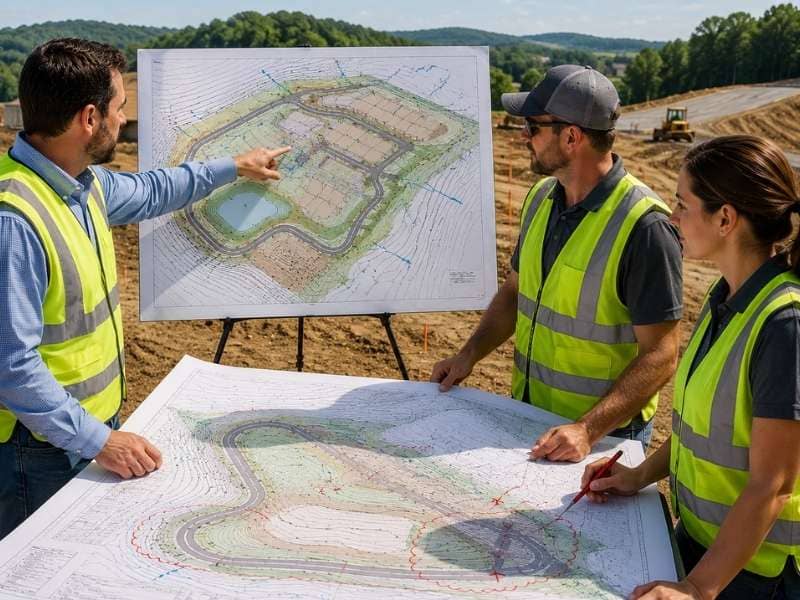
A grading plans shapes the land before a single foundation gets poured. It often decides whether a project moves smoothly or runs into trouble. Hilly regions often need extra care with grading, so proper planning helps a project start on solid ground. Builders, engineers, and property owners all depend on a clear grading plan to know what the finished site will look like. Here is why this one document carries so much weight on a project.
Why a Grading Plan Matters
A grading plan acts as the blueprint for everything that touches the ground on a project. It tells the team where the high points sit and where the low points sit. It also shows how the land will transition between them once construction wraps up. On hilly sites, slopes are part of nearly every part of the property. This kind of planning matters even more than it does on flat ground. A grading plan worked out early gives every other part of the design a stable foundation to build around. That includes building placement and utility runs. Skipping this step tends to surface problems later, often after other decisions already depend on the land staying a certain shape.
How a Grading Plan Helps Manage Rainwater
A grading plan also controls where rainwater goes once it hits the ground. That control comes from how the land itself gets shaped. Sloping the ground away from buildings and paved areas sends water toward drains instead of letting it pool near a structure.
A few grading techniques make this work:
- Sloping the soil gently away from foundations and walkways.
- Building shallow swales that carry water toward a drainage point.
- Setting high points and low points so water always has somewhere to go.
Without this kind of planning, puddles tend to form in low spots. Standing water can slowly damage pavement, siding, or landscaping over time. A grading plan that accounts for water movement from the start avoids most of these problems before they show up.
Why Slopes Need Careful Planning
Steep or uneven land creates real challenges that a grading plan has to address directly. A slope that’s too steep can erode over time, washing soil away and leaving bare or unstable ground behind. On sites with natural slopes, keeping grades within a safe range matters for both stability and long term durability. A grading plan sets out exactly how steep each section of the site can be. It balances what the land naturally wants to do with what the project actually needs. Getting this part right also reduces the amount of erosion control work needed later. A well planned slope tends to hold its shape instead of washing out after heavy rain.
How a Grading Plan Helps During Construction
During construction, a grading plan becomes the guide that crews actually follow on site. It shows how much soil needs to come out of one area. It also shows how much needs to go into another, often called cut and fill. Without that guide, crews are left guessing at elevations, and guessing tends to lead to redone work. A clear grading plan keeps everyone working from the same numbers. That cuts down on the kind of confusion that causes delays. Projects that follow a detailed grading plan from the start usually move through construction with fewer surprises and far less rework.
How Good Grading Helps Projects Last Longer
Good grading does more than just get a project through construction. It protects the site for years afterward. This matters most for roads, parking lots, and other paved surfaces that depend on stable ground. Pavement that sits on poorly graded soil tends to crack, settle, or shift sooner than it should. Those repairs add up fast. A grading plan that accounts for proper drainage and stable slopes gives pavement a much better chance of lasting. It tends to last as long as it was designed to last. Projects built on a solid grading plan tend to need fewer repairs over time. That keeps long term maintenance costs lower for whoever owns the property.
A grading plan pays for itself many times over, both during construction and for years after the project is finished.
Frequently Asked Questions
What is a grading plan?
A grading plan shows how the land will be shaped before and during construction. It maps out elevations, slopes, and drainage paths across the entire site. Builders and engineers rely on it to keep the project moving in the right direction.
Why is a grading plan important?
A grading plan is important because it helps control water, create safe slopes, and prepare the site properly for building. Without one, water tends to collect in the wrong places and slopes can become unstable. Getting this plan right early avoids costly fixes later in the project.
Why is grading especially important in hilly areas?
Grading is especially important in hilly areas because the land often has uneven slopes and changing elevation. Careful grading helps prevent erosion, drainage problems, and slope failures both during and after construction. A well prepared grading plan accounts for these challenges from the very beginning.
Who makes a grading plan?
Civil engineers usually create a grading plan for new projects. The work requires technical knowledge of slopes, drainage, and soil behavior. They study site conditions and design a plan that fits both the land and the project’s goals.
Can a grading plan help save money?
A grading plan can absolutely help save money over the life of a project. Good grading reduces the risk of water damage, erosion, and pavement failure down the road. Preventing these problems early almost always costs less than repairing them later.